
From Rushing Through Calls to Actually Closing Deals: What Speaking Speed Taught Me About Sales
I'm an engineer by profession. When I transitioned into sales, I knew my product inside and out. I could explain every feature, answer every technical question, and defend our solution against any competitor.
But I was terrible at sales calls.
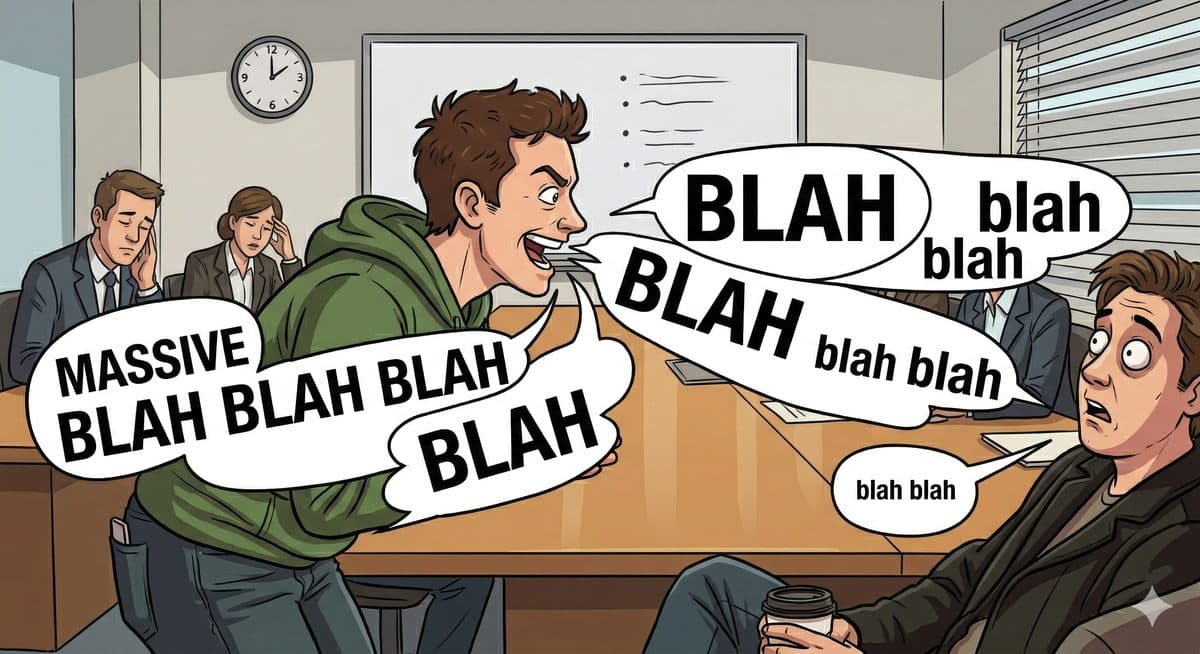
Not because I lacked knowledge — because I was nervous. And when I got nervous, I talked fast. Really fast. I'd cram what should have been an hour-long discovery call into 20 minutes, racing through my pitch like I was trying to escape the conversation.
I knew my facts. I was confident in our offerings. But something was off.
Watching the Best Performers Changed Everything
As I gained experience, I started paying attention to the top performers at our company. These weren't the people with the most technical knowledge or even the smoothest pitches. What set them apart was something simpler: they took their time.
They paused. They let silence sit. They seemed completely in control — like the call was happening on their terms, not the prospect's.
It took me hundreds of calls to internalize this. Less really is more when it comes to sales.
The Research Backs This Up
The statistics are clear. Research from Sales Insights Lab, which analyzed 23,900 sales conversations, found that top performers speak at an average of 171 words per minute, while average performers speak at 182 words per minute. That's only about 6.5% slower — but it's an audible, meaningful difference.
Even more interesting: prospects mirror this behavior. The same study found that prospects talking to top performers speak at around 174 words per minute, while those talking to lower performers speak at 198 words per minute. When you rush, your prospects feel rushed too.
Gong's research on objection handling tells a similar story. In a typical sales conversation, the average talking speed is 173 words per minute. But when flustered by an objection, average reps speed up to 188 words per minute. Top performers? They actually slow down slightly, maintaining around 176 words per minute. They pause five times longer than average reps after hearing an objection.
They don't panic. They don't pounce. They stay in control.
Knowing Isn't the Same as Doing
Here's the frustrating part: even after I understood all of this, I still struggled to control my pace in real-time. I'd finish a call, look at the metrics, and realize I'd been rushing again. The awareness came after the fact — when it was too late to do anything about it.
This was actually one of the needs that triggered us to create Smartcues.ai.
The speaking pace feature is one where we consistently hear people say, "I could use this for more than just sales calls." The concept is simple: a visual cue in your status bar that shows how fast you're talking, giving you a gentle nudge when you're speeding up. No intrusive alerts. No distracting notifications. Just a quick glance that helps you self-correct in the moment.
The metrics we use are based on the research I mentioned above. And because it's unobtrusive, you don't have to actively monitor it — just being aware it's there helps you slow down, take your time, and remember the basics you learned in training.
This is just one of the features you can test if you start using our tool. But honestly, even without any tool, start paying attention to your pace. It might be the simplest change that makes the biggest difference.